




Online games used to grow through a relatively predictable formula. A studio launched a campaign, bought traffic, measured installs, improved retention, and adjusted monetization. In that model, advertising brought the player to the game, and the game itself did the rest. But the rise of streaming has changed that sequence. Today, many players first encounter a game not through a banner, trailer, or app store page, but through a streamer’s broadcast, a highlight clip, or a viral gameplay moment.
This shift matters more than it may seem at first glance. When the audience comes from streaming rather than direct advertising, the game is no longer judged only by the experience it offers to the player holding the controller. It is also judged by how well it performs as a spectator experience. A match must not only feel good to play. It must also be readable, dramatic, and worth watching. That changes product decisions, core mechanics, pacing, interface design, live operations, and even how success is measured after launch.
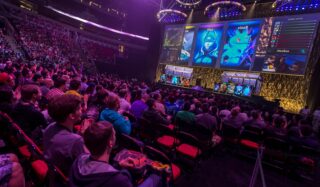
The Game Is No Longer Only Played, It Is Watched
In a traditional acquisition model, the player arrives with limited context. Maybe they saw an ad, read a short description, or watched a polished trailer. They install the game and learn its logic from the onboarding flow. In a streaming-led model, the future player often arrives after seeing the game in motion for hours. They have already watched its best moments, its funniest failures, and its most intense victories. Their first impression is not a promise. It is a performance.
That means the game has to work on two levels at once. It must be satisfying for the active participant, but it also has to make sense to passive viewers who did not complete a tutorial and may not understand the deeper systems. A confusing but strategically rich match may still be enjoyable for a veteran player, but it becomes a problem if spectators cannot tell what is happening or why a moment matters. Visibility becomes part of design.
Match Structure Becomes More Dramatic
One of the clearest changes appears in the structure of matches themselves. Games that depend on streaming exposure benefit from rounds, encounters, and systems that generate tension in visible ways. Long periods of low-intensity action can still exist, but they become harder to justify if they do not contribute to buildup. The most stream-friendly games create regular spikes of emotion: clutch moments, reversals, risky choices, narrow escapes, surprise outcomes, and last-second victories.
This does not mean every game must become chaotic. It means pacing matters differently. A match has to contain moments that are easy to recognize as meaningful. The viewer should be able to sense that something important is about to happen, even without understanding every rule. Development teams therefore spend more time asking questions such as: Where does tension peak? How often do exciting situations occur? How visible is a comeback? Can a losing player still create a memorable moment?
When streaming becomes a discovery channel, games increasingly need built-in dramaturgy.
Readability Starts to Matter More Than Complexity
A game designed mainly for dedicated players can afford layers of information that reveal themselves slowly over time. A stream-exposed game still needs depth, but it also needs readability. Spectators must understand the basics quickly: who is ahead, who is under pressure, what objective is in play, and why the current decision matters.
This affects animation clarity, combat feedback, objective markers, map logic, sound cues, and interface hierarchy. Too much visual noise makes a game harder to watch. Too much hidden information makes it hard to follow. Too many overlapping systems reduce the power of key moments. Developers begin to reduce ambiguity not because players are incapable of learning, but because an unreadable game loses one of its strongest organic growth channels.
In many online games, the most successful spectator moments are surprisingly simple. A chase. A duel. A final circle. A desperate defense. These scenarios work because they can be read instantly. That does not eliminate strategic depth. It only means the surface of the game has to communicate clearly.
Mechanics Are Designed for Reactions, Not Just Outcomes
Streaming changes how developers think about the emotional shape of mechanics. In a purely player-centered model, a mechanic is judged mainly by fairness, mastery, balance, and long-term depth. In a streaming-aware model, one more question appears: does this generate a reaction?
Some mechanics naturally produce better live content than others. Unpredictable tools, high-risk decisions, visible ultimates, interactive environments, betrayal systems, extraction pressure, asymmetrical roles, and spectator-triggered chaos often create stronger moments for broadcasts. These systems give streamers something to react to and viewers something to remember.
This does not mean design should become shallow or built entirely around gimmicks. The danger is obvious: mechanics that create clips may damage long-term competitive integrity. But the broader change is real. Teams increasingly look for systems that support emotional storytelling in real time. A mechanic is no longer evaluated only by how well it resolves inside the rules of the game, but also by whether it produces moments that spread beyond the match.
Onboarding Must Deliver the Fantasy Faster
Players who come from advertising often need a full introduction. Players who come from streams are different. They have already seen the fantasy. They want to reach it quickly.
That changes onboarding. Studios have less room for slow early-game friction because the incoming player expects to access the exciting part almost immediately. If the stream showed intense team fights, social deception, high-speed movement, or dramatic extraction, the first session has to move the new player toward that experience fast. Otherwise the promise collapses.
As a result, developers often shorten tutorials, simplify early decisions, reduce menu friction, and accelerate access to signature mechanics. The first playable experience becomes less about explaining everything and more about fulfilling expectations. In other words, onboarding is no longer just education. It is conversion of observed excitement into lived excitement.
Live Operations Become More Important
Streaming also increases the pressure on live operations. A game that depends on streamer attention cannot remain static for too long. Repetition becomes visible faster when thousands of viewers are seeing the same patterns, same loadouts, same maps, and same outcomes every day.
That pushes teams toward more frequent updates, rotating events, limited-time modes, balance nudges, creator-facing features, and content drops timed around audience behavior. Developers are not only supporting players. They are supporting the visibility cycle of the game. If a title stops producing new stories, it becomes harder for streamers to keep returning to it, and harder for viewers to stay curious.
This is one reason why post-launch operations now feel closer to media programming than to traditional patch maintenance.
Success Metrics Expand Beyond Classic Performance Data
In a streaming era, a healthy online game cannot be evaluated only through installs, retention, and revenue per user. Those metrics still matter, but they do not tell the full story. A game may have modest paid acquisition and still grow strongly if it is continuously watched. Conversely, a game may buy traffic efficiently but fail to build cultural presence because it does not produce watchable moments.
Studios therefore need a broader product lens. How often is the game streamed? How many creators return to it? How many moments are clipped and shared? Which mechanics generate engagement outside the game client? Which updates revive viewing interest? The product is now partly shaped by its afterlife on platforms beyond itself.
A Multiplayer Game Becomes Part Game, Part Show
The deeper truth is that streaming does not simply add a marketing layer to online games. It changes what the product is. A multiplayer title is no longer only a system for play. It becomes a system for performance, observation, reaction, and circulation. The audience includes both players and spectators, and often the same person moves between those roles.
For developers, this creates new demands but also new opportunities. Games that understand streaming well can achieve stronger organic growth, clearer community identity, and longer cultural relevance. But they only get there if they accept a basic shift in thinking: the product is no longer designed for isolated use. It is designed for visible experience.
In that sense, the streaming era has not replaced good game design. It has expanded it. Mechanics still need depth. Matches still need fairness. Progression still needs structure. But now all of that must coexist with something else: the ability to be watched, understood, and remembered in real time.



More Stories
The Rise of Social Casinos in Modern Game Development
Player Psychology and Retention Systems in Social Casino Design
What games will be popular in 2024 given the development of technology